Search This Blog

Showing posts with label Books. Show all posts

Saturday, June 20, 2015

Not A Review On Reading The Hunger Games

On my last trip to Japan back in May, I decided to cough up the $12 to buy The Hunger Games for my Kindle. All three! This is my first time reading through the books, and my only exposure to Panem and its grotesque entertainment of having kids kill each other in the arena have been through the movies that have been released in the past few years.

Actually, watching the movies has been the primary motivation for me to read the books. Oh sure! Many of you have recommended to me that I should read the books as they are excellent. So when I was preparing for my last business trip, I decided that it would be a good thing to have while sitting around during travel. Airport lounges, airplanes, trains, oh my! (And as a bit of a sidenote…reading The Hunger Games was also one of my New Year’s Goals-Not-Resolutions). I got through a bunch of chapters on my 3-hour train rides:


A photo posted by JR (@r4nd311) on

It took me a little while to get used to Suzanne Collins’ writing style. After having read Tolkien’s eloquence in The Lord of the Rings, Collins’ incomplete sentences and stream of consciousness-ish style was kind of jarring for me. But I eventually figured out that her writing style for The Hunger Games pointed to something very important, which prompts me to write this not-review.

I don’t want to get bogged down by English IV AP literary analysis, but I realized that the book was written with Katniss Everdeen as the narrator. She’s the one telling her story as it happens. Hence, I can understand why sometimes the sentences and things seem choppy, pointed, and sometimes representative of how I blog. Haha. As I was reading through the three books, I discovered something profound that didn’t come across as effectively in the movies as it does while reading.

Because the book is written from Katniss’ perspective, I got to know her inner thoughts, emotions, struggles, etc. While Jennifer Lawrence does effectively play the part of Katniss on screen, the movies still lack the intimate details of what Katniss is actually going through in her mind and heart.  In other words, reading the books opened up a new dimension to the Mockingjay saga by letting me know Katniss’ interior self.

You can read her like a book. Pun and reference totally intended.

Because of reading The Hunger Games and realizing how it invites me as the reader to an inside perspective of the mind and heart of Katniss Everdeen, I started thinking that we don’t generally experience each other’s interior selves. Like 95% of the time, I encounter a person’s exterior. From their exterior expression, I can begin to reason out their interior dispositions. The only way for us to know what we’re really thinking and feeling on the inside is to share it. Knowing the interior self can help answer the why for the exterior self. It begins to make sense to me why Katniss did the things she did because I know, from reading her like a book, what motivated her on the inside.


I also thought about Facebook. Far stretch from Panem, I know. There have been some instances whereby some of my Facebook friends got the very wrong idea of something I posted online (a very exterior thing) because they don’t know who I am and where I’m at interiorly. Granted, it doesn’t help that I’m sometimes purposely very cryptic and vague at times on Facebook. And at the same time I’m not one to share something directly from my interior self. I like the idea of giving a taste, but not the full entree. The Hunger Games was a smorgasbord of Katniss’ interior self. I’ll give an appetizer, but I don’t generally want to give you the adobo (Filipino dish). I suppose I’m reserved online because I’d rather that people spend the time to get to know me personally and in person before sharing my more inside self with them. Without knowing me on that level, I won't make much sense online.

On a different note, to tie this notion of knowing the interior self to the Catholic faith, I think of the saints. By no means am I equating Katniss to a Catholic saint, but I’d like to have her as an analogy. She lets us, the readers, know what she’s feeling and thinking on the inside. Many saints’ written works provide a deep look into their motivations and interior lives as to why they are disciples of Christ. And for me, a journeying pilgrim towards Paradise, it’s fascinating and inspiring to read about the interior lives of the saints.  They’re all so unique, and some enduring even more grave things than having to kill others in government-mandated killing arenas.

I’ve attempted at reading St. Faustina’s diary. I couldn’t read it for too long as it is extremely substantial (not in quantity of words but in quality of depth) as she writes about her encounters with Christ and her sufferings. I’ve read bits and pieces of St. Therese’s autobiography through Vr. Fulton Sheen’s pen, and from those small chunks, I know there is something very substantial there too in The Little Flower’s words. And those are just two Catholic saints that I’ve merely scratched the surface of who they are in light of their relationship to Christ.

But it begs the question of what makes a saint... a saint? I don’t know for sure what that looks like exactly, but a good place to start is to read about their inner selves that they share in their own words. From there, I can work on my own interior life in God, inspired by those who have come before me, so that my exterior is an expression of that interior life in Christ. And to share that with others.

-JD

Mockingjay // The Hunger Games Wiki

Saturday, February 28, 2015

The Lord of the Rings Mythology Explained In Four Minutes

I just recently finished reading Lord of the Rings! AND mostly read and skimmed through the appendices on Middle-earth history! It only took me a year of mostly reading during lunch breaks at work!


To celebrate, I'd like to share this YouTube video that explains the mythology of the Lord of the Rings ... in four minutes.


- JD

First saw video on Mark Shea's blog.

Sunday, August 10, 2014

Currently Reading: Salvifici Doloris by Pope St. John Paul II

In my life right now, I've recently started to really confront some personal struggles. By doing so, I've realized how much I have to work on in order to heal from the sufferings I've endured.

It's scary. It's incredibly liberating.  As I'm overcoming self, my life isn't getting any easier to deal with. The warm fuzzy feelings are not the prize for really wrestling with myself. Actually, I feel like I'm suffering more.

Human suffering is an interesting thing to contemplate. It's inevitable though it may come in different degrees varying from typical first world problems like losing an iPhone charger to matters of life and death or torture. The list goes on.  Looking back at my own life, I can definitely recall moments of great suffering that couldn't be avoided. Do I wish I could go back in time and free myself from such pain? Yes, but at the same time I realized that such moments had to happen in order for me to grow as a person.

In all my recent seemingly magnified suffering, I've learned to acknowledge that these moments are opportunities to grow, but I still inhale at suffering well. I inhale at approaching my suffering. I inhale at embracing my suffering. It's been such a non-Hawaiian roller coaster ride (I recently saw Lilo & Stitch...) of emotions and sufferings lately for me, but my attitude about the inevitable suffering from it all has not been great. That's a personal struggle, too, on how to suffer well and embrace it.

Praise God I have a spiritual director! Again, a spiritual director is someone who can help guide someone through how their spiritual life plays into their life. And again, mine is a local Catholic priest.

I met up with him recently to begin talking about what I'm going through. It was a really good meeting, but as these things often go, I'm confronted with a sense of humility because I've realized that my way isn't necessarily the best way of handling my life. I left that meeting feeling more down simply because  my attitude regarding my sufferings and trials were too self-centered rather than oriented towards God. It's almost as if I am unwilling to part with desiring pity.

Still, it was a really good and necessary meeting. He affirmed my taking steps to really confront my struggles, but he helped me realized that the inevitable suffering as a result of fighting such fights needs to be embraced. He mentioned that according to St. Thomas Aquinas, there are three levels of dealing with suffering: 1) kicking and screaming 2) accepting it but disliking it and 3) embracing it. Really embracing suffering is the only way for me to be free and have a sense of liberty and peace with whatever I'm dealing with.


That is so freakin' hard.

I'm constantly reminded of my inner struggles regarding particular matters. And I'm supposed to embrace them? Psh. But, no. There is wisdom and precedence in that. How can I call myself Christian if I do not embrace my suffering just as Jesus Christ embraced His?

So that's why, as a result of this meeting with my spiritual director, he recommended that I read the apostolic letter, Salvifici Doloris by Pope Saint John Paul II. It's on the meaning of Christian suffering and how suffering has salvific power. Christ's suffering, death, and resurrection gives such a profound and salvific meaning to human suffering. I have a lot of room to grow in this area on how to deal with suffering. I just started this apostolic letter, and it's already given me good nuggets to think about and reflect/pray on. Now, last time I met with my spiritual director, he assigned me to read Man's Search for Meaning by Dr. Viktor Frankl. That book helped me realize the importance of attaching meaning to my suffering because that whole idea is what helped Dr. Frankl and other inmates at a Nazi concentration camp endure all that they had to endure in order to survive.

Suffering. Such a fascinating thing to contemplate and reflect on. I'm spoiled as a Catholic because I have this opportunity to really enter deeply on the meaning of suffering and how that plays into my life. I'm grateful that what I'm dealing with now is mostly internal struggles and not the craziness that Christians in Iraq are having to deal with right now. I'm glad I don't have to worry about getting shot in the back, beheaded, hung, or undergoing atrocious ways to die because I'm Christian...at least for today. Either way, I cannot let their suffering go to waste. Their suffering is not in vain.

In a feeble attempt to unite my suffering to theirs, and ultimately unite our suffering to Christ on the cross, I'll strive to offer those moments of suffering up for Christians in Iraq. They need our prayers.

- JD

To read Salvifici Doloris online, click here. It's free!

Christ embracing His cross // Copiosa.org (image from The Passion)

Sunday, June 8, 2014

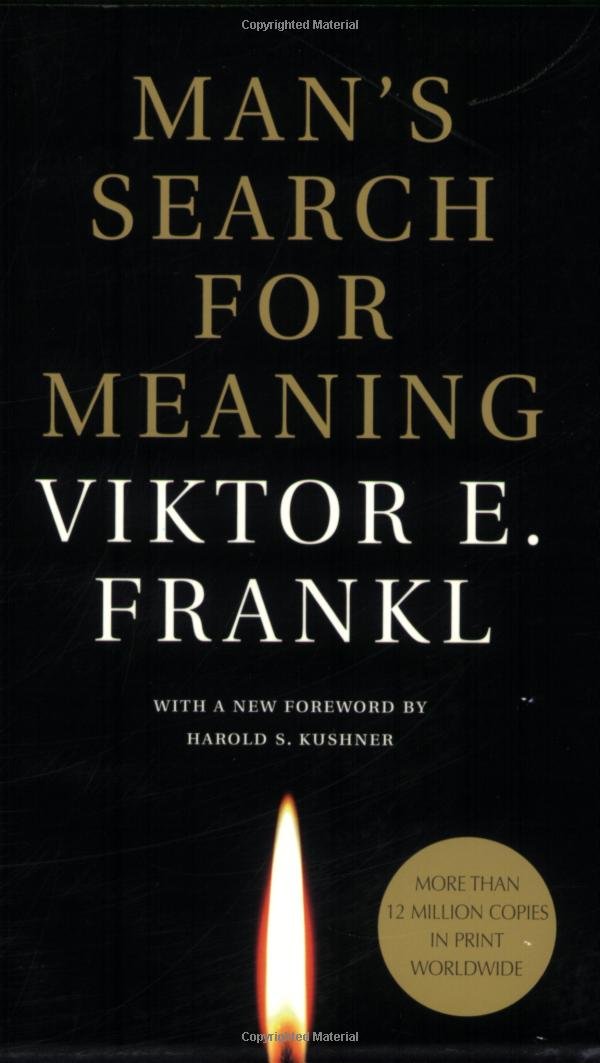
Currently Reading: Man's Search For Meaning by Victor Frankl


When I was blogging about being frustrated with my Facebook friends posting their baby pictures, I mentioned that I had met with my spiritual director. The reason why I met with him is because it had been nearly half a year since I last met with him, and I felt that it was time to meet with him again.

While sipping on coffee and sitting on the patio of a local grocery store, I told him about my current dealings with my frustrations (which wasn't about baby pictures on Facebook). I won't go into deeper details for now, because that is not what this blog post is about! To help remind me how to deal with my frustrations, we talked about Fulton Sheen's understanding of the ego and I, which I first learned about in the book Lift Up Your Heart. This was the first book my spiritual director had me read to begin entering into a deeper Christian spiritual life.

From this last meeting with my spiritual director, I indicated that my frustrations were causing me suffering that I didn't know how to understand or deal with. He recommended that I read this book, Man's Search for Meaning by Dr. Viktor Frankl.

I'm nearly done with it, and it's been a pretty cool read so far.

Dr. Frankl was a Jewish man who survived the concentration camps during World War II. He was a psychologist. Now, I know that a lot of ink has been spilled in order to describe the atrocities that the Nazis committed in their extermination of the Jews and other enemies of their regime. Dr. Frankl himself even asserts this, and while he does recount his own personal experiences in this book, he approaches it from a psychological perspective from his own experiences and observations. In the later half of the book, he talks more about the technical aspects of logotherapy, which is the branch of psychology that he started. Logotherapy helps individuals deal with their neurosis by finding meaning in life.

As I've been reading these experiences on sunny days outside during my lunch break, I find it unfathomable to relate to the dire situations that Frankl and friends had to endure while at Auschwitz. They had to do so much work with so little nourishment. If any of them were found to be too weak to work, they would be sent to the gas chambers and crematoriums. If they were sick, they were badly sick. They were treated so poorly. They were lied to. They had to sleep in their own feces and urine. They were beaten. And the list of sufferings go on and on.

Without giving too much of an analytical perspective on the book, I appreciate Frankl pointing out how is it that men could have survived the mental, physical, emotional, and spiritual sufferings of being in a Nazi concentration camp. It's because they attached meaning and purpose to their suffering. Those who could not see a purpose to their suffering lost the will to live or deteriorated more quickly. It was beauty, goodness, and truth that kept these men going whether it was experiencing the beauty of nature or thinking about and desiring to survive because of their beloved wives, which are some examples to name a few from Frankl's observations.

So, as I'm about to finish this book, it's helping me to see that my sufferings regarding my current crosses and frustrations have meaning. And because they have meaning, I can endure. While it may totally inhale at times right now, in the end it is worth it.

I cannot let my suffering go to waste.


- JD

Tuesday, May 27, 2014

Currently Reading: The Lord of the Rings

Yes, I'm terribly behind. Yes, the movies came out like over ten years ago. Yes, I finally own it thanks to the miracle that is Kindle.

I'm enjoying it because I'm a fan of those epic journey stories. Currently, Frodo and friends are still trying to escape Black Riders and are on the fringes of the Shire. I guess I never fully appreciated that hobbits love to sing for it almost seams like every chapter (for now) has a merry song included within. When will the Lord of the Rings musical come out? Haha.

Again, I'm reading this for fun because I've read too many books for Catholic intellectual and spiritual pursuits.

Though, I'm curious what Catholic truths Tolkien has either purposely or not purposely woven through this journey. But, that's not like...a deal breaker in terms of enjoying the story. For funsies! That's all. Because I'm a nerd like that.

We'll see.

Just because.
- JD

LEGO Lord of the Rings // IGN

Wednesday, May 7, 2014

Finally! One Kindle Book To Own Them All!

I just got done reading Answering Atheism by Trent Horn minus some of the rather lengthy appendices with arguments against the classical arguments for the existence of God. Whenever I turned that last Kindle app page, I decided that I haven't read a book for fun in a long while! I mean, I read for fun just not like in a fiction sort of way. Most of the recent books that I've read have been for Catholic intellectual pursuits, and the last time I entered through the pages of a land of wonder was in Alagaesia with Eragon when I finished Inheritance over a year ago.

Some of the books that I've read recently, before Answering Atheism, were about different things. Venerable Archbishop Fulton Sheen taught me that love requires a third Person in Three To Get Married, C.S. Lewis showed me four different kinds of love in The Four Loves, and a witty commentary on What's Wrong With The World by G.K. Chesterton.

I have a very real problem of not having enough physical space to hold all the books I have read already and all the books that I want to read. Therefore, thank goodness that there exists such magical things as smartphones and eReaders-that-also-have-apps like Kindle.


There are so many books I want to read on the fictional side of things that I had a little bit of a rough time deciding which one to go with. Being the engineer that I am, I wanted something that fulfilled a particular set of requirements:
  • Must be a Kindle book because I have the app and no shelf space
  • Must be a fictional work, particularly of a genre that I appreciate
  • Mustn't be a Catholic book for intellectual/spiritual growth and knowledge
Thumbing through my Amazon wishlist, it turned out I had a list of books/series that fulfilled those requirements. Dang it.

Meh, I went with The Lord of the Rings (the trilogy, to own them all) because it is time that I finally read it.

Yesssssssssss
It's been a while since I've seen the movies so the story ought to be fresh for me once again, especially now that I'll be entering into it via the pen of Tolkien rather than the film of Jackson.

$10 later, I can't wait to start it!

About time.
- JD

Gollum smile from British Fan Girl blog

Sunday, November 17, 2013

Because of Eli


A little over a month ago, I blogged about this Catholic Answer's radio show featuring Chad Judice as the guest. If you recall, his son, Eli, was diagnosed with spina bifida and wasn't expected to live or have good quality of life. As I heard Chad talk about this story regarding on his son on the radio, I was inspired to hopefully read Chad's books regarding Eli someday.

Well, I didn't mention it after I had written that blog post, but literally the following week I found out my parish's Respect Life Committee would be hosting Chad Judice at our parish in the month of November to kick off their new series of events entitled, "Fridays for Life", where they will invite someone every quarter to talk about pro-lifey things. Like, I had no idea that they were planning on inviting him! So when I found out he would be coming to my parish to come speak, I couldn't pass up that opportunity. 

And that happened the other day!

What did he talk about?
Even though I had heard the basic gist of Eli's story via that radio show and a little bit from Chad's EWTN appearance on The World Over, it was definitely more gripping to listen to him speak in person. He shared with us the state of his life prior to Eli and how normal it was. He's a history teacher and coach, and one time one of his students asked Chad before he got married what his greatest fear was, and he answered with having a child with special needs. Before Eli, Chad's faith was meh.

After giving us this background, he began to recount the process of how he and his wife found out about Eli's condition with spina bifida. Their doctor recommended abortion and for a moment, she considered it. But something stirred within them to decide to keep the baby.

The parts of the entirety of the story that stood out to me were those seemingly miraculous (or coincidental) moments. Chad teaches at a Catholic high school, and it was miraculous to him that hundreds of teenagers genuinely prayed for Eli's healing. This was miraculous to him because our culture today doesn't make it conducive for the average teenager to care about this sort of thing, AND the fact that they prayed showed him that they acknowledged that Eli is in fact a human being in his mother's womb and not just a clump of cells with deformities.

What I also found quite interesting is how the Daily or Sunday Gospel readings over the course of this process seem to fit soooooo well with whatever Chad was dealing with at the time. He shared with us those readings that were cause of hope and inspiration for him at major milestones throughout this process.

Chad also detailed how his life of prayer increased in dealing with all the emotional and spiritual challenges in accepting the fact that his son isn't going to live a normal life. He provided more seemingly miraculous moments when praying at the grave of Charlene Richard, who is on her way to beatification. Chad and his wife went to a "healing priest". His wife received a rose after praying a novena for St. Therese of Lisieux's intercession, which for every knowledgeable Catholic, that's a real deal. And he listed many more instances of how God seemed to have offered him and his wife consolations in their decision to have Eli, but not without challenges.

Eli was born in 2009. Despite spinal and neuro problems from his condition, he's doing pretty good. He cannot walk. He cannot go to the bathroom on his own--someone else has to manually empty his bladder or induce a bowel movement. He's on medications to prevent epilepsy and urinary tract infection. He loves to swim. He loves baseball. He's pretty cognitive despite brain problems. He's in pre-3K. It takes full effort from everyone around him to take care of him. Chad mentioned that his in-laws and his own parents are pretty involved in taking care of him and are on rotation for weekends.

How did this affect me?
I think spent 75% of the time reminding myself not to cry. In my head, I kept saying to myself "Don't cry don't cry don't cry don't cry don't cry!" I guess I was just moved by Chad's inner strength at dealing with all this because I realized that if I were in his shoes, I don't think I could handle it. But that's where his story is inspiring. Chad couldn't handle all this on his own. He realized he had to surrender to God's will, and in doing so, he found the strength to endure this. He also realized that he can longer live for himself. That whole idea of agape love (self-sacrificial love) made manifest in caring for Eli, because without the love and care of others, he would die. But to care for him demands so much time and effort, even if it's inconvenient or unpleasant. Chad said, "love isn't about feelings--it's a decision." And I see in the Judice's lives that self-sacrificial decision to will the good of each other and the good of Eli, which is authentic, profound love. Inspiring!

But yeah, I began to start reflecting on my own prayer life and thinking about my own inner strength while listening to Chad's story. I realized that I have a lot to improve on. Haha sometimes I feel like I'm too Catholic in a group of Catholics, but I'm glad that I had the opportunity to listen to Chad to help me realize that I'm not Catholic enough...that I'm not trusting enough of God's will for my life.

After his talk and taking some questions, I definitely went and bought his two books. The first one, Waiting for Eli, is the story about Eli. The second one, Eli's Reach, is about other people whose lives were affected by learning about Eli's story. Like, seriously--stories of conversion and hope because they've read Chad's first book. He gave us a preview at the end of the talk (ie. shameless plug, but that's understandable). Fascinating! I hope to start these books sometime after I finish some of the current books I'm currently reading!

Anyway, what a cool opportunity to hear him speak. Please pray for him and his family, especially for Eli!

You can follow Chad Judice at www.chadjudice.com, which has links to his social medias and books.

We need stories of hope and inspiration, and be reminded that there's only so much we can do and control. The rest is up to God. And I'm glad I had the opportunity to hear Chad tell this story in person.

Because of Eli.
- JD

Sunday, June 9, 2013

50 Pages of Aquinas


I recently started following Dr. Taylor Marshall's blog, Canterbury Tales.  He's a former Episcopalian priest but now a happily and fruitfully married layman in the Catholic Church with a beautiful family of 7 kids, including their newest.  He's also the Chancellor of Fisher More College nearby.  Oh, and he's an Aggie, class of 2002. WHOOP!

He recently announced that he would be releasing a 50-page book on St. Thomas Aquinas for free, but only for people who signs up for his email newsletter.  I couldn't resist in the offer for simple reasons... A) free B) I don't know much about St. Thomas Aquinas C) ebook, because my physical Catholic bookshelf is overflowing and D) free.

It took me a week to read it because I'm terrible at finding time to read (nevermind that it's taken me a year and a half to be 75% through Inheritance, the last book about Eragon...(but hey! I've read like 5 Catholic books in that time...)).  But thank goodness it was 50 pages because my first mistake in trying to learn St. Thomas Aquinas was purchasing his Summa Theologica for my Kindle app and feeling rather intimidated by it.

Dr. Marshall provides a brief bio on Aquinas and succinctly illustrates his mindset and way of thinking.    He also makes a distinction between philosophy and theology through the mind of Aquinas. I think the most useful thing I learned were the "4 Causes": formal, material, efficient, and final.  An example would be a blog post.  The formal cause of a blog post is the idea of what to write about.  The material cause would be an Internet connection and a keyboard. The efficient cause of a blog post would be me writing the blog post. And the final cause of a blog post is for me to share something about me and Catholicness.

After learning about Aquinas and the way he thinks, Dr. Marshall then presents Thomistic proofs and thoughts about God, angels, humans, virtues, and natural law.

All in all, I think this was a great way to begin learning about one of our Angelic Doctors and great saints.  Now, with a little more background and getting a feel for how he thinks, I think his Summa will be a little easier to understand.

Check out Dr. Taylor Marshall's blog and sign up for your own copy of Thomas Aquinas in 50 Pages! Missing out would just be...unreasonable! (unless you're already a Thomistic expert...)

Leveling up in Thomism,
- JD

Saturday, January 19, 2013

Tolkien Recites the "One Ring" Passage

Pretty cool stuff!  I saw this via Twitter via @CatholicBloggs who got it from The American Catholic, who found it from Creative Minority Report, who got it from Badger Catholic (somewhere), who (I'm assuming) found this YouTube video below!

While I think that the movie depiction of Gandalf translating the language of Mordor on the ring to Frodo in The Fellowship of the Ring is sufficient already to satisfy my need for epicness, this is another type of epicness... where the author is reading his own words:


One does not simply recite The Lord of the Rings.
- JD


Thursday, December 13, 2012

Tolkien

With the midnight release of The Hobbit later this evening, I feel compelled to share something that I've learned fairly recently. 

I watched The Lord of the Rings when I was in high school and read The Hobbit when I was in college.  I never really connected these works with my Catholic faith because my appreciation of faith wasn't mature enough during those times to make that connection.  It was more, "Ooh ahh, adventure! Epic battles!"

Yet a year or two ago, I learned that J.R.R. Tolkien, author of these works and others, was actually quite the Catholic and bff's with C.S. Lewis (who isn't Catholic, but in the end a Catholic-wannabe).

Sweet! 

I hope to relive The Lord of the Rings and The Hobbit through a Catholic lens sometime very soon.  I'm sure my appreciation for those tales and how they connect to my Catholic faith would be much greater after reliving those books/movies.  Perhaps that's the magic of Tolkien--that even without considering the Catholic undertones of his Lord of the Rings trilogy, they stand on their own as tales with an epic sense of adventure and involving a difficult journey with allies against the forces of evil.

Found a cool quote from an article on EWTN.com, quoting Tolkien in one of his letters:
"The Lord of the Rings is of course a fundamentally religious and Catholic work," he wrote, "unconsciously so at first, but consciously in the revision. That is why I have not put in, or have cut out, practically all references to anything like "religion", to cults or practices, in the Imaginary world. For the religious element is absorbed into the story and the symbolism" (Letter 142). 
Lastly, someone I know maintains a website that offers lessons on making Catholic connections.  Their Lord of the Rings series can be found here: Link To Liturgy - Lord of the Rings Series.

Worth blogging more about, I'm sure.
- JD

Bold = updated Sunday 12/16/12

Saturday, July 21, 2012

G.K.


One does not simply have GK Swag.
I just finished G.K. Chesterton's Orthodoxy this past week. For those of you who don't know, Chesterton was an English writer and philosopher at the turn of the 20th century. Catholic. And he wore his apologetics hat very well, if you conclude that he wears hats at all.

What prompted me to read Orthodoxy was a quick browse through the Kindle store and noticing that some of Chesterton's works were free. So I thought, "oh why not! It's free anyway!" Boom. Downloaded.

But you see, I wasn't quite prepared to handle reading Chesterton just yet. Up until then, to me he was just a popular name that came up every now and then when I hear Catholics quoting Catholics. No big deal. I started reading Orthodoxy without really knowing who Chesterton was. And to my asking and receiving, Orthodoxy is essentially his arguments as to why he converted and why orthodoxy is necessary.

Man. He's an intelligent fellow. To be honest, it was a little difficult to follow with what he was saying throughout the book because he writes with English wit, paradoxes and referenced a bunch of other writers and philosophers that I'm unfamiliar with.

I will say though, he does offer a different type of perspective on Catholic orthodoxy. He, like, compares the philosophy of orthodoxy to other philosophies to show the fallacies or shortcomings of non-Christian ideals. And he says everything with that English wit. Awesome.

I'm probably going to read this book again down the line when I've matured a bit more in the Catholic faith.

Mmm. Orthodoxy.
- JD

Friday, May 4, 2012

All Natural!


I'm a big fan of a Catholic radio show called Catholic Answers Live which airs in the evenings during the week.  The host of the show is Patrick Coffin and every hour the show he usually brings in a guest where they focus on a particular topic. Listeners are allowed to call in and ask questions regarding the Catholic teaching of the topic of that hour.  Pretty cool stuff!  I've learned a lot.  And it gives me something to listen to on my commute home from work.
Patrick Coffin, in addition to being a radio show host, is also a book and blog writer (and he wears a few other hats not worth mentioning here).  If not evident from the picture above, he wrote Sex Au Naturel where he presents factual and scriptural points on the Catholic Church's teaching regarding sex and contraception/sterilization/abortion.  
I just finished the book today after reading it here and there for a few weeks.  My motivation for reading it stemmed from him shamelessly plugging his book whenever callers pose a question regarding contraception.  In light of what's going on in the United States right now with the HHS mandate that demands all insurance companies to cover contraception and abortifacient drugs, I felt it necessary to arm myself with whatever resources I can muster to defend the Church's teaching.
What I liked about the book was how readable it is.  Patrick presents the information clearly and concisely with a ton of references.  The book is meant for Catholics to read, and he even says that at the beginning.  He covers the history of Christian teaching on contraception, the implications of Humanae Vitae, makes the case for Catholic authority on teaching this matter, birth control, the overpopulation myth, and sterilization...and things in-between.  You can find more info about the book and its Amazon link here on his website at patrickcoffin.net.
It's short, but I don't know how many pages there are because I have the Kindle edition...haha.
But anyway, while this blog post isn't a critical review of the book...I know that I'll probably be referencing this book or referencing his references for future blog posts.
I definitely recommend this book for those Catholics and Christians who aren't too clear on Church teaching regarding contraception.  He isn't preachy or judgmental--he just echoes facts and verses.  It's also going to be a good resource for an aspiring Catholic apologist, especially now that the issue of contraception has been elevated to national attention.  NOW is the time to let the American society know why the Catholic Church teaches what she teaches regarding sex and contraception.
On to the next book about sex and Catholic teaching...
Faith. Hope. Charity. Going green.
- JD

Monday, April 30, 2012

The Cup


A familiar test to determine whether you're an optimist or pessimist is to look at a glass containing water.

Is the glass half full? Or half empty?

Half full? Optimist.  Half empty? Pessimist.

We understand that the optimist views life from a positive perspective, whereas the pessimist views life from a negative perspective.

But I'm an engineer...so the cup is neither half-full or half-empty--it is twice as big as it needs to be, haha!  I digress...

I've been reading Orthodoxy by G.K. Chesterton.  He's a Catholic writer and apologist.  Very smart and learned man.  He has an essay in Orthodoxy where he reflects on the optimist and pessimist and how does the Christian fit into either or identify with either.  And he makes the case that the Christian is neither optimist or pessimist.  While I won't go into a lengthy blog post examining his arguments and literary style because I'm not in English IV AP anymore...I just wanted to share a thought that popped in my head regarding optimism, pessimism, and Christianity.

You see, the Christian doesn't view the cup as half-full or half-empty.  I think the Christian views the cup as necessitating it to be empty before it can be full.  But when the cup is full, it must be emptied again.  Just thinking back to Jesus' last hours as one example...He completely emptied Himself so that our lives may be full in Him.  When we truly love as God calls us to love, we have to completely empty ourselves in order that we may be fulfilled.

And I just realized...the cup shouldn't be stagnant.  The cup has to be completely empty before it is completely filled.  The cup has to be completely filled in order to be completely emptied.  The Christian is neither optimist nor pessimist for he or she knows that the life will have its ebb and flow of emptiness and fulfillment.

Haha, if that makes any sense whatsoever to you...

Hmm, this is worth reflecting on some more.

What do you think?

Faith. Hope. Charity. Engineering cups.
- JD

Thursday, April 19, 2012

Books I've Read So Far

Ever since the end of college, I've collected and started reading many Catholic books.

Here's some that I've read so far:

Theology of the Body for Beginners by Christopher West
This book and other similar beginner resources for the Theology of the Body (TOB) was my "great discovery" at the end of college.  I didn't realize Blessed Pope John Paul II had reflected on the meaning of man and woman created in the likeness and image of God.  Obviously, a lot flows from that.  And by immersing myself in the Theology of the Body, I can see the world through a different lens.  This is worth other blog posts.

The Way Of Mary by Mary Ford-Grabowsky
This was given to me as a gift for Christmas.  I like this book because it walks you through the major events of Mary's life as revealed in Scripture and offers reflections and quotes for each event.  It offered great insight on the life of Mary in her footsteps towards God.

Unplanned by Abby Johnson
I've sort of blogged about this before in my other blog, but this book is about a former Planned Parenthood director's conversion from pro-choice to pro-life.  Abby's story touches me in a unique way because I was in college a few miles away from everything described in the book.  And I almost participated in the 40 Days for Life campaign where she left Planned Parenthood.  This book is great in that it offers a personal look on both perspectives on the abortion issue.  Though Abby's life went unplanned, she made the right choice.

Theology of His Body by Jason Evert
As a group of guys in the youth group, we went through this book together.  It's sort of like a teen version of some of the stuff I've read from Christopher West but focusing more on what true masculinity is.  This was great because it offered other insights at a basic level, and it was cool having round table discussions with the other guys about what we read.


Be A Man by Fr. Larry Richards
I went to go hear him speak at a Catholic radio event last summer, and the man is unafraid to knock Catholicism into you.  And his book is no different.  I love how Fr. Larry Richards offers stories of his personal life throughout the book as an example of what it means to be a man created in God's image and following God.  It's not quite TOB, but heavily emphasizes the spiritual aspects of being a man for God.  I felt like my butt got kicked after finishing this book.

How To Find Your Soulmate Without Losing Your Soul by Jason & Crystalina Evert
While this book is written for women, I decided to read it anyway just to get a better idea of things to consider, lol.  Though I wasn't able to relate to most of the book, it was still beneficial.  I think, after reading it, I have better idea of what type of guy I'm not supposed to be and to be more considerate of how the female mind/heart/body/soul works.

The Good News About Sex & Marriage by Christopher West
The idea of "chastity within marriage" is probably a foreign idea for most, but after learning more about TOB, it makes more sense.  Christopher West explains TOB as it relates to marriage and defends Catholic teaching on issues such regarding sex like contraception and sterilization.  It's useful in that it is in question/answer format, so it's a great to have as a reference.  A recommended read for anyone pursuing TOB and wanting to know more about what the Catholic Church teaches regarding sex and marriage.

The Secret of the Rosary by St. Louis du Montfort
After hearing excerpts through some of the guys in the youth group, I finally sat down and read it after obtaining a copy.  St. Louis du Montfort beautifully explains the Rosary and the awesome power of Our Lady's intercession.  This book is a great way to appreciate the Rosary more.

Anyway, I'm in the middle of a few others, but that's another blog post.

Faith. Hope. Charity. Bookin' it.
- JR